
How to Control Emotions at Work Place
Learn effective strategies to manage emotions at work and boost productivity. Discover tips to stay calm, composed and professional in stressful situations.
3/6/2026
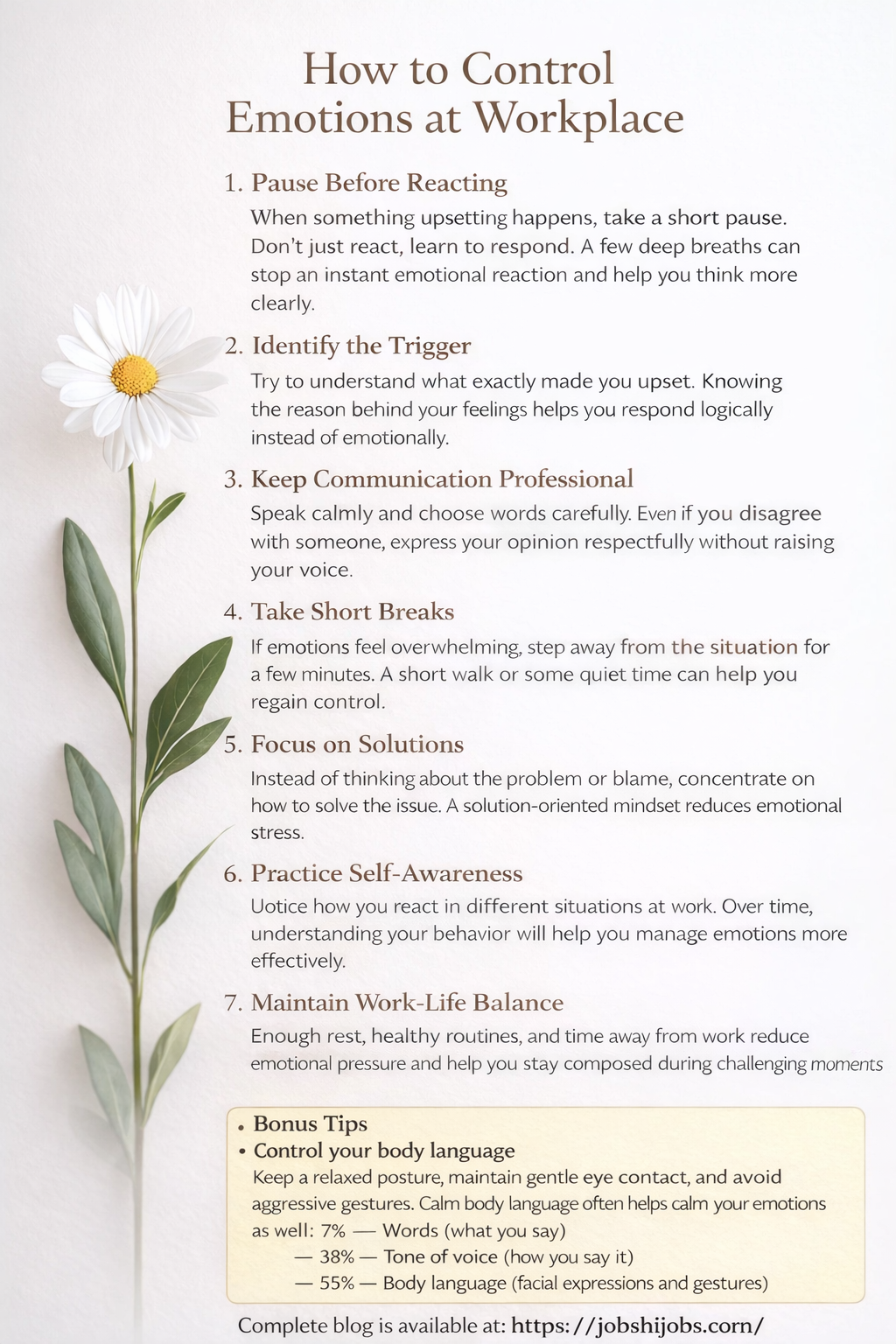
1. Pause Before Reacting
When something upsetting happens, take a short pause. Don't just react, learn to respond. A few deep breaths can stop an instant emotional reaction and help you think more clearly.
2. Identify the Trigger
Try to understand what exactly made you upset. Knowing the reason behind your feelings helps you respond logically instead of emotionally.
3. Keep Communication Professional
Speak calmly and choose words carefully. Even if you disagree with someone, express your opinion respectfully without raising your voice.
4. Take Short Breaks
If emotions feel overwhelming, step away from the situation for a few minutes. A short walk or some quiet time can help you regain control.
5. Focus on Solutions
Instead of thinking about the problem or blame, concentrate on how to solve the issue. A solution-oriented mindset reduces emotional stress.
6. Practice Self-Awareness
Notice how you react in different situations at work. Over time, understanding your behavior will help you manage emotions more effectively.
7. Maintain Work-Life Balance
Enough rest, healthy routines, and time away from work reduce emotional pressure and help you stay composed during challenging moments.
Bonus Tips
• Control your body language
Keep a relaxed posture, maintain gentle eye contact, and avoid aggressive gestures. Calm body language often helps calm your emotions as well.
• Work on your voice tone:
Voice tone is extremely important because voice tone can destroy or build a conversation. A calm and respectful tone can build understanding, while a harsh tone can create tension even if the words are correct. According to communication research by Albert Mehrabian, the impact of different elements in conveying feelings and attitudes in a conversation is often explained as:
· 7% — Words (what you say)
· 38% — Tone of voice (how you say it)
· 55% — Body language (facial expressions and gestures)
• Don’t take everything personally
Sometimes feedback or criticism is about the task, not about you. Viewing it objectively helps prevent unnecessary emotional reactions.
• Build emotional boundaries
Not every comment or situation deserves your emotional energy. Learn when to engage and when to simply stay neutral. It is not important what to get, important is that what to leave for your peace of mind.
• Practice calm breathing
Slow, deep breathing for a minute can quickly reduce stress and help you regain focus during tense moments.
• Learn from every situation
After a difficult moment, reflect on what happened and how you handled it. This awareness gradually strengthens emotional control in future situations.
Contact
Reach us for support anytime
Phone
support@jobshiijobs.pk
+92-333-4238450
© 2025. All rights reserved.
Get latest job alerts on your WhatsApp